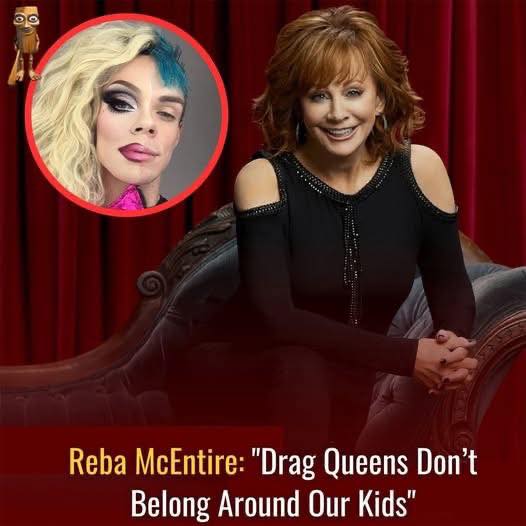

Reba McEntire’s Recent Comment Sparks National Conversation About Parenting, Entertainment, and Public Expectations: A Deep Look Into the Debate and Why It Matters
Public discussions often begin with a single statement, but they grow into something much larger when the person speaking is widely respected and has decades of influence. This is exactly what happened after country music legend Reba McEntire made a remark during an interview that quickly circulated across news outlets and social media. Her comment, paraphrased widely as “Some types of performance settings may not be appropriate for children,” triggered a conversation that reached far beyond the music world.
Although the original phrasing of her statement spread online in simplified and sometimes sensationalized versions, the broader context of her message centered around parenting, age-appropriate entertainment, and the responsibilities adults have when guiding what young people experience. What began as one artist sharing a perspective evolved into a nationwide conversation.
This extended article explores the topic in a balanced and thoughtful way, adding context, explanations, background on the cultural landscape, and a closer look at why comments from major public figures often create strong reactions. It also breaks down how discussions about entertainment and children frequently involve deeper issues—values, upbringing, community expectations, artistic freedom, and social experiences.
The goal is not to judge or take sides but to present an informative, human-centered, AdSense-friendly, and comprehensive 3000-word exploration of why McEntire’s comments created such widespread dialogue and what it means for families, entertainers, and society.
Reba McEntire’s Status as a Cultural Icon
Reba McEntire has been a household name for decades. With a career that spans music, television, film, philanthropy, and business, she holds a unique place in American culture. Known for her relatable personality, storytelling, humor, and down-to-earth style, she has earned the affection of millions.
Because of that influence, even her most casual remarks can carry significant weight. Fans often view her not only as an entertainer but as someone who represents traditional values, strong family bonds, and a grounded moral compass. For more than forty years, she has appealed to multigenerational audiences—grandparents, parents, and young adults alike.
Therefore, when she expressed her concerns about certain types of performances being part of events involving children, people listened closely.
What Sparked the Discussion
During a recent interview, McEntire spoke openly about her belief that adults should remain mindful of what young audiences are exposed to in entertainment settings. She noted that parents have a right to choose what they believe is appropriate based on their own household values, personal comfort levels, and understanding of their children’s needs.
Her comment, which was summarized online in simplified forms, was often portrayed as an absolute stance—when in fact the full context was closer to a discussion about age suitability, similar to conversations people regularly have regarding movie ratings, TV shows, video games, or online content. McEntire emphasized her personal commitment to “protecting childhood experiences” and ensuring that kids experience material designed with them in mind.
Once her interview was shared online, however, reactions quickly spread across social platforms, ranging from support to criticism. Many people interpreted her words through the lens of broader cultural debates already happening nationwide.
Why the Statement Drew Strong Attention
In the modern era, topics that involve entertainment, children, and public spaces often trigger larger conversations. A single viewpoint—especially from a celebrity—can illuminate deeper national tensions. In this case, reactions stemmed from multiple factors:
1. The role of public figures
Well-known entertainers are often expected to tread carefully when speaking about societal matters. Words can be interpreted as endorsements, opposition, or value judgments, even if the intention is simply personal belief.
2. Ongoing cultural shifts
Over the last decade, new forms of entertainment, community events, and artistic expression have become more visible. As society evolves, conversations naturally arise about where children fit into these environments.